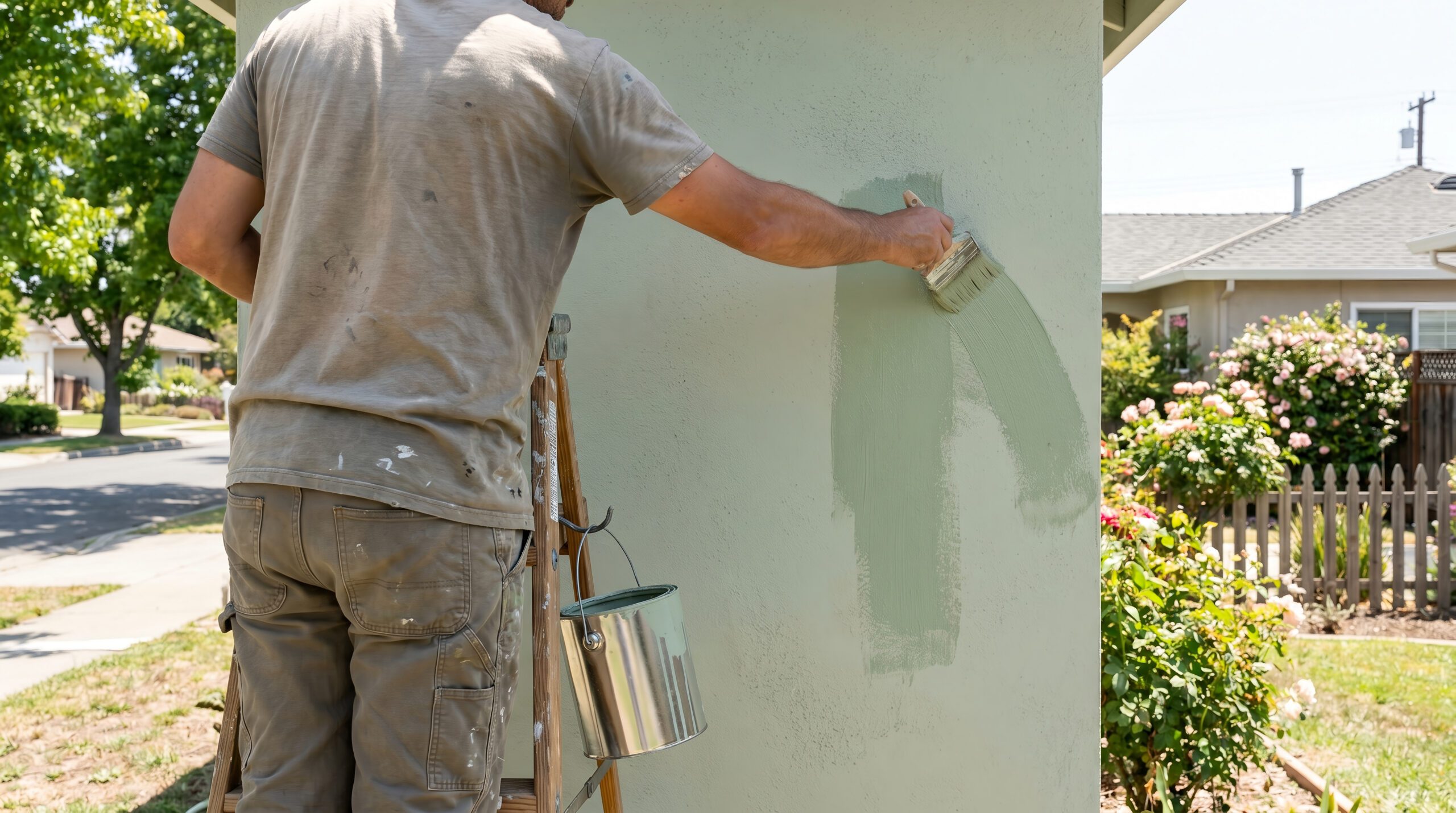
Fall cleanup in Denver is not the same job it is in Chicago or Charlotte. Our first hard freeze usually shows up in early to mid-October, then we get sixty-degree afternoons in November, dry air for months, and the occasional wet snow that snaps a maple in half. A cleanup plan built for a humid climate will leave your landscape worse off here.
The short version: in Denver, fall cleanup is really three jobs stacked together — removing debris, protecting root systems through a dry winter, and getting water moving away from your foundation before the freeze-thaw cycle starts. Get those three right and spring becomes easy. Miss the third one, and you spend April fixing settled patios and dead lawn edges.
At Thunderbird Design, we approach fall work as the last design decision of the year. What you cut, what you leave standing, and where water sits in November all show up in how your yard looks the following June.
When to Do Fall Cleanup in Denver
Timing matters more than effort. Doing the right task in the wrong month is the most common mistake we see on Front Range properties.
| Window | Priority tasks | Why this timing |
| Late August – mid September | Core aeration, overseeding, fall fertilization | Warm soil plus cooling air is peak root-growth season for Kentucky bluegrass; seed needs 4–6 weeks to establish |
| Late September – mid October | Irrigation blowout, downspout and grade check, first leaf pass | Must be done before the first sustained hard freeze |
| Mid October – early November | Second and third leaf pass, cut back mushy perennials, tree deadwood removal | Most leaf drop finishes here; plants have gone dormant |
| After first hard freeze | Mulch top-off, winter watering schedule begins | Mulching before the ground cools traps warmth and encourages growth that won’t survive |
If you only have one weekend, spend it in the late September window. Irrigation and drainage failures are the expensive ones.
Leaf Removal: Mulch Some, Remove Others
Blanket leaf removal wastes free soil amendment. Blanket mulch-mowing suffocates lawns. The right call depends on the tree.
Mulch-mow in place: honeylocust, ash, birch, and most small-leaf ornamentals. Run a mulching blade over a dry lawn when the leaf layer is thin, and the clippings break down over winter, feeding the soil.
Remove: cottonwood, silver maple, sycamore, and large oak. These leaves are big, waxy, and slow to decompose. Left in place they mat into a wet, impermeable layer that smothers turf crowns and invites snow mold.
Two field notes from Denver properties specifically:
- Leaves that blow into window wells and against foundation walls hold moisture against the structure all winter. Clear those before anything else, even if the lawn can wait.
- Never let leaves accumulate in a dry creek bed, swale, or area drain. A clogged conveyance channel in November becomes a sheet of ice across your walkway in January.
Beds are different from lawns. A two-inch leaf layer over perennial beds is genuine winter insulation and overwintering habitat for native bees. Leave it, and just pull leaves off the crowns of anything prone to rot.
Fall Pruning: Less Than You Think
The instinct to tidy every shrub in October causes real damage. Pruning is a growth signal. Cut a shrub back hard in early fall and it pushes tender new shoots that have no time to harden off before the freeze, which means dieback you’ll be cutting out anyway in spring.
Do prune in fall:
- Dead, broken, diseased, or rubbing branches
- Limbs overhanging the roof, driveway, or walkway that are likely to fail under heavy wet snow
- Long, whippy rose canes that will thrash in wind — shorten for stability only, not a hard cutback
Wait until late winter dormancy:
- Structural or shaping cuts on most deciduous trees and shrubs
- Fruit trees
- Roses (hard pruning belongs in spring, typically once forsythia blooms)
Wait until right after they flower:
- Lilac, forsythia, mockorange, and other spring bloomers. They set next year’s buds on old wood, so a fall haircut removes the entire flower show.
Leave standing on purpose:
- Ornamental grasses. The dormant plumes are one of the few things with real presence in a Denver winter landscape, and the standing foliage protects the crown. Cut them back in March.
- Coneflower, rudbeckia, and sedum seed heads, for the same reason plus bird interest.
One caution specific to our region: emerald ash borer has spread through parts of the Front Range, and ash is heavily represented in Denver’s older neighborhoods. If you have a mature ash showing thinning canopy, dieback from the top down, or D-shaped exit holes, get a licensed arborist out rather than treating it as routine pruning.
Lawn Preparation for a Dry Denver Winter
Cool-season turf does most of its root work in fall, which makes September the highest-leverage lawn month of the year.
Core aeration. Denver’s clay-heavy soils compact under foot traffic and irrigation. Pulling plugs — not spiking — opens channels for water, air, and roots. This is the single most useful thing you can do for a struggling bluegrass lawn.
Overseed immediately after aerating. The open holes give seed the soil contact it needs. Aim to finish by mid-September so seedlings root before dormancy.
Fertilize once, in fall. A late-season application feeds root development rather than blade growth, which is exactly what you want going into winter.
Final mow height. Take the last couple of cuts down slightly — around two to two and a half inches. Long grass mats under snow and encourages snow mold; scalped grass exposes crowns to desiccation. Slightly short, not bare.
Winter watering is not optional here. Denver typically sees somewhere in the range of 14 to 15 inches of precipitation a year, much of it as dry snow that sublimates without ever reaching the root zone. Denver Water’s own guidance encourages watering during extended dry winter spells, and it’s worth knowing how Denver’s water restrictions apply to landscaping before you plan a schedule. Once your system is blown out, plan on hose-and-sprinkler sessions roughly once or twice a month on days above 40°F with no snow cover, focusing on lawn edges near hardscape, south and west exposures, and anything planted in the last two years. Most “winterkill” we’re called to diagnose in April is really drought.
Irrigation Winterization
This is the deadline-driven task. Water left in a backflow preventer or above-grade valve cracks brass, and that repair costs far more than the blowout.
The sequence: shut off the main supply at the stop-and-waste valve, drain the backflow assembly, then clear each zone with compressed air. Pressure control is the part people get wrong — professionals keep air pressure conservative for the pipe material, because too much air will blow heads and fittings apart. If you’re unsure what your system can tolerate, that’s a good reason to have your irrigation system blown out professionally. Insulate the exposed backflow and shut off any hose bibs feeding drip lines.
Do this before the first sustained hard freeze, not after the first cold night.
The Drainage Check Almost Everyone Skips
This is where fall cleanup crosses over into protecting your investment. Before the ground freezes, walk the property with one question: where does water go?
Check for:
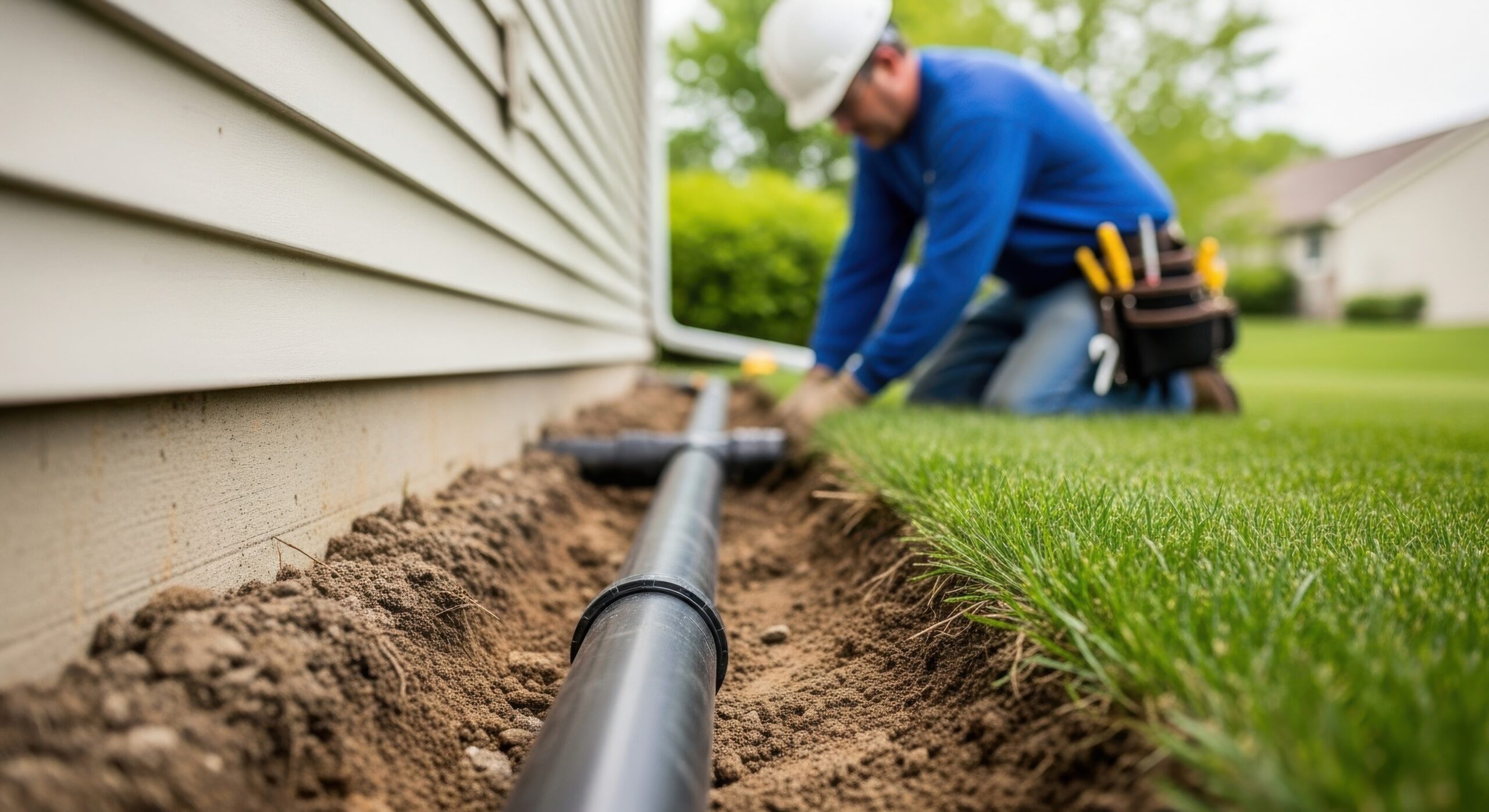
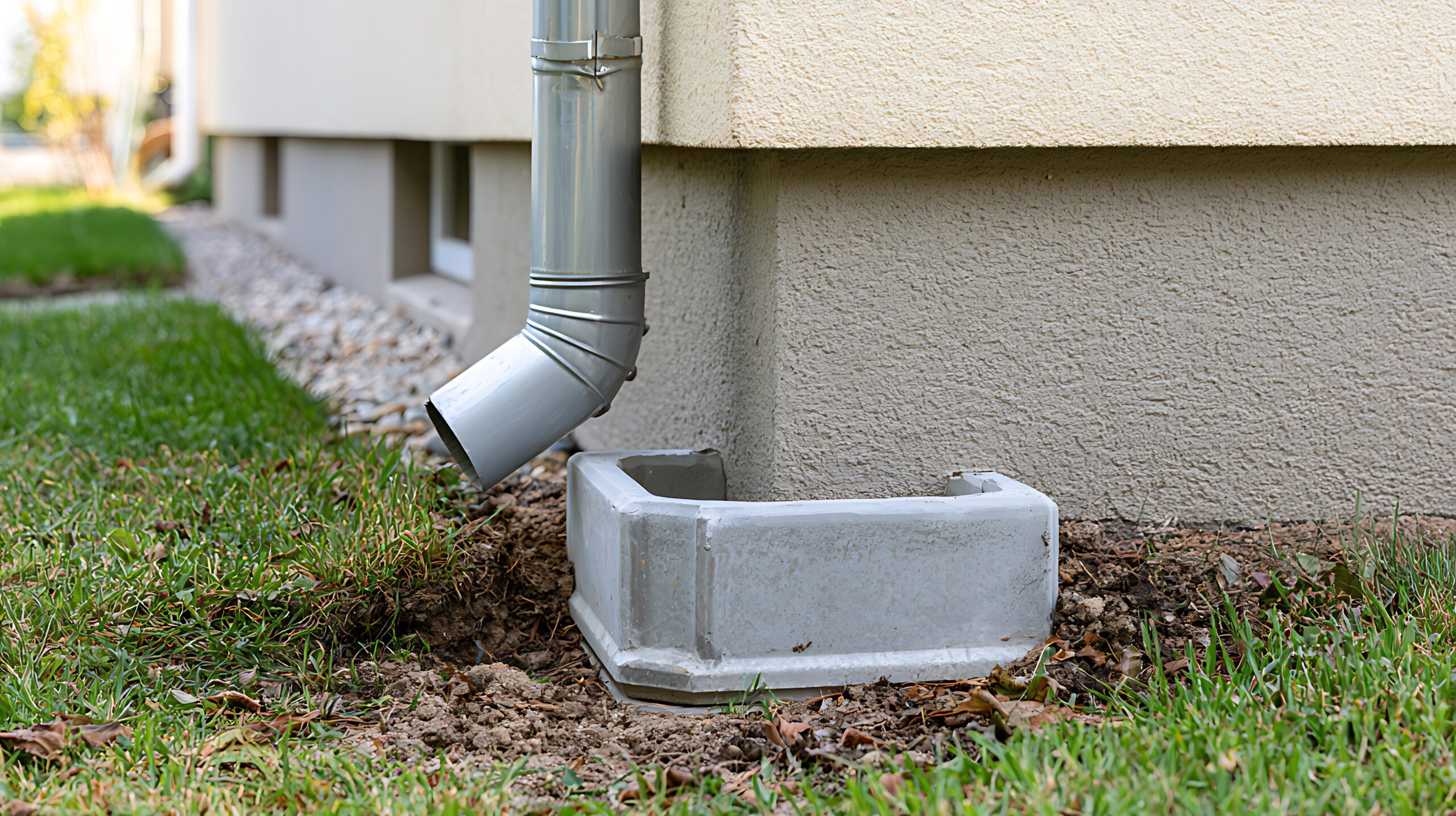
- Downspouts that discharge within a few feet of the foundation. Extensions should carry water six to ten feet out onto a positive slope. Denver’s expansive clay swells when it takes on water, and that pressure is what moves foundations and slabs.
- Negative slope near the house. Soil should fall away from the foundation — the widely used residential benchmark is about six inches of drop across the first ten feet. Look for beds that have been built up over years of mulch top-dressing until they’re higher than the surrounding grade.
- Standing water 24 to 48 hours after irrigation or rain. A puddle that lingers is a grading problem, not a soil problem.
- Low spots along walkways, driveways, and patios. Water that pools there in December is ice in January and a settled slab in three years.
- Debris in area drains, catch basins, swales, and dry creek beds. Clear them completely.
If you find real problems, fall is a reasonable time to correct them — the ground is still workable and plant material is dormant. Denver’s soil makes this more complicated than it looks in most parts of the country, which is why we wrote a full breakdown of drainage on Denver clay soil. Larger corrections fall under drainage and grading work.
Hardscape and Bed Prep
Skip the rock salt. Sodium chloride deicers spall concrete, degrade mortar joints in flagstone, and leave salt in the soil where it kills the plants along your walkway edges. Sand or gravel gives traction with no chemistry. If you must use a deicer, use it sparingly and never on concrete poured within the last year.
Clear organic debris off stone and pavers. Wet leaves left on flagstone all winter stain it and hold moisture in joints, which accelerates freeze-thaw damage. This matters most on patios and retaining walls where the joint material is doing structural work.
Sweep, don’t pressure wash, in late fall. Forcing water into joints right before a freeze is counterproductive.
Mulch after the ground cools. Two to three inches, pulled back from trunk flares and perennial crowns. Mulch piled against bark holds moisture and invites rot and rodents.
Protect vulnerable trunks. Young, thin-barked trees — maple, linden, honeylocust — are prone to sunscald on our intensely sunny winter days, when the south-facing side of the trunk warms up and then refreezes at night. Light-colored tree wrap from November through April prevents it. This is one of the most common preventable losses on new Denver landscapes.
Common Denver Fall Cleanup Mistakes
Some of these overlap with the broader landscaping mistakes Colorado homeowners make year-round. The fall-specific ones we see most often:
- Blowing leaves into the street or storm inlets, which contributes to neighborhood flooding and is prohibited in many municipalities
- Hard-pruning shrubs in September and losing next season’s structure
- Mulching heavily before the first freeze
- Skipping the sprinkler blowout because “it hasn’t gotten that cold yet”
- Cutting the lawn extremely short in a misguided attempt at winter tidiness
- Assuming snow counts as watering
- Ignoring a puddle that has been in the same spot for three years
DIY or Hire It Out?
Honest assessment: leaf removal, final mowing, and bed cleanup are well within reach for most homeowners with a Saturday and a tarp.
Where a professional earns their fee:
- Irrigation blowout, because the failure mode is expensive and pressure control requires the right equipment
- Core aeration, because rental units are heavy, awkward, and often don’t pull deep plugs in compacted clay
- Mature tree work, especially anything requiring a ladder or over a structure
- Drainage and grading corrections, which need to be measured and shot with a level rather than eyeballed
- Diagnosis — knowing whether that brown patch is snow mold, dog damage, drought, or a broken head
Many Denver homeowners split it: handle the leaves themselves and put the technical items on a seasonal landscape maintenance program so the deadlines don’t get missed.
Frequently Asked Questions
When should I do fall cleanup in Denver?
Start lawn work in late August through mid-September, complete irrigation winterization and drainage checks by mid-October, and finish leaf removal and perennial cutback through early November. Mulch after the first hard freeze.
When is the first frost in Denver?
Denver’s first freeze typically arrives in early to mid-October, though it varies year to year and urban neighborhoods often run a bit later than the airport. Plan freeze-sensitive tasks — especially sprinkler blowouts — for late September to be safe.
Should I remove all the leaves from my yard?
No. Mulch-mow thin layers of small leaves into the lawn and leave a modest leaf layer on perennial beds as insulation. Remove large, waxy leaves like cottonwood and silver maple from turf, and clear leaves entirely from window wells, drains, swales, and hardscape.
Do I need to water my landscape in the winter in Denver?
Yes. Our dry winters and low effective snow moisture mean roots can desiccate. Water roughly once or twice a month on days above 40°F without snow cover, prioritizing new plantings, evergreens, and lawn near pavement.
Is fall a good time to prune trees and shrubs in Denver?
Only for dead, damaged, or hazardous wood. Save structural pruning for late winter dormancy, and prune spring-flowering shrubs like lilac right after they bloom instead.
When should I blow out my sprinkler system in Denver?
Late September through mid-October, before the first sustained hard freeze. Waiting for cold weather to arrive risks cracked backflow assemblies and valves.
Can fall cleanup include drainage work?
It can, and it’s often ideal timing. Plants are dormant and soil is still workable, so grading corrections, downspout extensions, and drain installation cause less disruption than they would mid-season.
The Real Point of Fall Cleanup
A good fall cleanup isn’t about a tidy lawn in November. Almost nobody is looking at your yard in November. It’s about arriving at spring without a repair list — no dead lawn edges, no heaved flagstone, no cracked backflow, no shrubs that need to be cut back to stumps.
That’s also why we treat it as part of design rather than a chore. Ornamental grasses left standing, seed heads catching frost, a dry creek bed that reads as a design feature while doing real hydraulic work — a landscape that’s been planned well has something to look at in February. If yours goes flat every winter, that’s a design opportunity rather than a maintenance problem — and there are plenty of backyard renovation ideas that thrive in Denver’s climate that hold their shape through winter.
If you’d rather not spend October chasing deadlines, get in touch with our team and we’ll put together a fall scope for your property, including a drainage assessment before the ground freezes.