A well-lit backyard in Denver is not just more usable after sunset. It is a fundamentally different space than the same backyard in the dark, and the homeowners who invest in thoughtful landscape lighting consistently describe the change as one of the most surprisingly impactful improvements they have made to their outdoor space. When Thunderbird Design works with Denver homeowners on landscape lighting projects, the reaction after installation is almost always some variation of the same thing: we had no idea it would look like this.
This guide helps Denver homeowners understand lighting types, placement principles, safety considerations, energy use, and what the installation process actually involves, so the planning conversation starts from an informed position rather than from scratch.
Why Landscape Lighting Matters More in Denver Than Most Homeowners Realize
Denver’s outdoor season extends well into the evening for a significant portion of the year, and the quality of the outdoor experience after sunset depends entirely on what lighting has been designed into the space. A backyard without lighting becomes invisible and unusable after dark, which in practical terms means losing the most comfortable outdoor hours of Denver’s summer evenings when temperatures have dropped to genuinely pleasant levels.
Beyond usability, landscape lighting contributes to the security and perceived safety of a property in ways that matter both to the homeowners who live there and to the neighborhood context. A property with well-designed exterior lighting is a less attractive target for opportunistic property crime than a dark one, and the lighting that serves the backyard for outdoor entertaining also serves the home’s security function during the hours when the backyard is not actively in use.
Curb appeal after dark is a real estate consideration that landscape lighting addresses in ways that daytime landscaping cannot. A property with thoughtful landscape lighting that highlights architectural features, mature trees, and designed landscape elements makes a strong impression from the street at night that unlit properties cannot match. For Denver homeowners who are attentive to property value and neighborhood presentation, landscape lighting is an investment that contributes to the property’s character around the clock rather than only during daylight hours. Landscape lighting services for Denver properties gives an overview of the lighting design and installation work that Thunderbird Design brings to Denver outdoor projects.
The Primary Types of Landscape Lighting
Understanding the functional categories of landscape lighting helps homeowners think about their lighting needs systematically rather than simply pointing at fixtures and hoping for the best result.
Path lighting is the most foundational category for safety and navigation. Path lights positioned along walkways, steps, driveway edges, and transitions between outdoor zones provide the illumination that allows safe movement through the yard after dark. The goal of path lighting is reliable visibility at grade level rather than dramatic visual effect, and the fixtures should be positioned and aimed to light the walking surface without creating glare that impairs rather than aids navigation.
Uplighting directs light upward from grade level onto trees, architectural elements, walls, and landscape features, creating the dramatic effect that defines the visual character of a well-lit landscape at night. A mature tree uplighted from below produces a visual presence at night that is completely different from its daytime appearance, and the combination of several uplighted trees and architectural elements creates a nighttime landscape that feels designed and curated. Uplighting is the category that most transforms the visual quality of the landscape after dark and produces the wow reaction that homeowners describe after seeing their property lit for the first time.
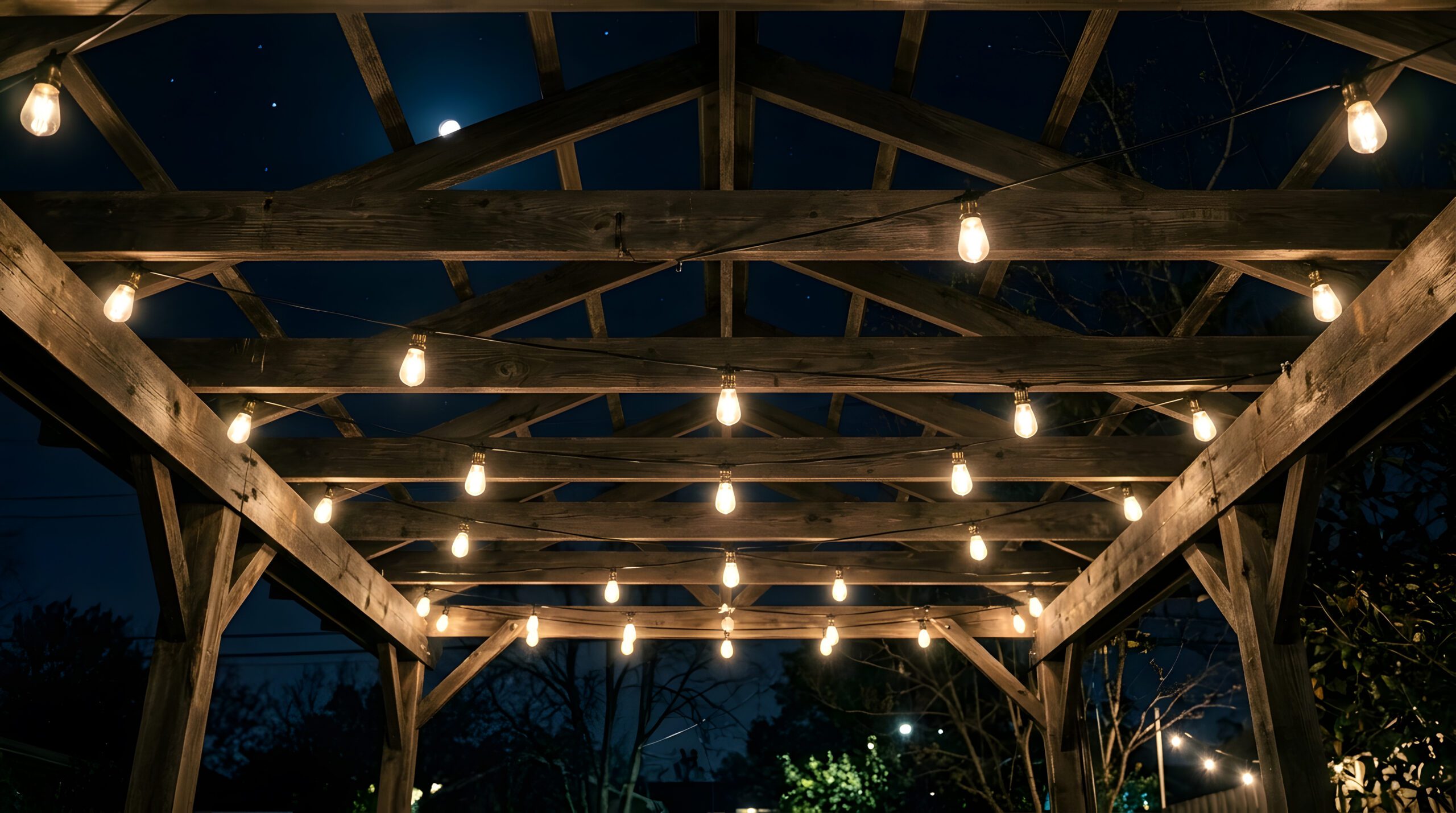
Downlighting from elevated positions, including trees, pergola structures, and wall-mounted fixtures, creates ambient light that simulates natural moonlight in its soft, diffuse quality. Tree-mounted downlights that cast dappled light through foliage onto the ground below are among the most naturalistic and most appealing nighttime lighting effects available in a landscape, and they are particularly effective for patio seating areas where intimate, non-glaring ambient light is more appropriate than direct task lighting.
Accent lighting highlights specific landscape elements, sculptures, water features, and planting details that deserve attention after dark. Accent lights are typically smaller, more focused fixtures that draw attention to a specific element rather than illuminating a broader area, and they contribute to the layered quality of a well-designed lighting scheme by adding detail and interest beyond what the primary path and uplighting layers provide.
Task lighting for outdoor kitchens, dining areas, and workspaces provides the functional illumination that those areas need for practical use after dark. An outdoor kitchen without adequate task lighting is genuinely difficult to cook in after sunset, and a dining area without sufficient light for comfortable dining and conversation is less enjoyable than one with appropriate illumination for the activity. Landscape lighting for Arvada and surrounding Denver communities shows the range of lighting projects Thunderbird Design has completed across the Denver metro area.
Low Voltage vs. Line Voltage Lighting: Understanding the Difference
The voltage system used for landscape lighting affects the safety profile, installation requirements, energy efficiency, and design flexibility of the lighting system, and understanding the difference between low voltage and line voltage systems is important background for the planning conversation.
Low-voltage landscape lighting systems operate at twelve volts rather than standard household current at one hundred twenty volts. The lower voltage makes the system safer to work with, reduces the risk of serious electrical shock from damaged wiring or fixture failures, and allows the wiring to be run closer to the soil surface than line voltage wiring without the conduit protection that line voltage systems require. Low-voltage LED systems are the standard for most residential landscape lighting applications in Denver because of their safety profile, energy efficiency, and the wide range of fixture options available.
Line voltage systems that operate at standard household current are appropriate for certain outdoor lighting applications, including security lighting, high-output area lighting, and applications where the power requirements exceed what low voltage systems can deliver. Line voltage outdoor wiring requires conduit protection, proper weatherproof connections, and installation by a licensed electrician with appropriate permits, which adds to the installation cost and complexity relative to low voltage systems.
The practical implication for most Denver residential landscape lighting projects is that a low-voltage LED system installed by a qualified landscape lighting contractor provides the safety, efficiency, and design flexibility that the project requires, and that line voltage elements are added where specific requirements justify the additional installation complexity. Landscape lighting for Castle Rock and surrounding areas provides context on the lighting systems that Thunderbird Design installs across different Denver metro communities.
Designing a Lighting Plan: Where to Start
A lighting plan that produces a cohesive, well-balanced nighttime landscape starts with understanding what the lighting is supposed to accomplish and for whom, which is a different starting point than simply identifying features that could be lit.
The primary use areas of the outdoor space should be the first planning priority. The patio dining area, the outdoor kitchen if one exists, the primary seating area, and the pathways that connect these areas to the house entry are the functional elements that need to be addressed before the decorative and accent lighting layers are considered. A lighting plan that prioritizes the decorative elements and then tries to fit functional lighting in afterward often produces a result that looks interesting but does not support the practical needs of the outdoor space.
The landscape features that most deserve nighttime attention are the second planning priority. Mature trees with interesting structure, significant specimen plantings, architectural elements of the house that are worth highlighting from the yard, and water features that have visual interest at night are all candidates for the uplighting and accent lighting that creates the nighttime landscape character.
The transitions and safety elements that need to be addressed regardless of the overall design direction, are the third consideration. Steps that are not adequately lit are a safety hazard. Grade changes that are not visible at night create trip risks. Property edges and driveway margins that need to be visible for navigation should be addressed in the plan, even if they are not the most visually interesting elements of the lighting design.
Working with a landscape lighting designer who can develop a comprehensive plan that addresses all three of these priority layers in a cohesive, balanced design produces better results than self-directing fixture placement based on individual elements without a plan that considers how the elements relate to each other after dark. Landscape design services for Denver homeowners provides context on the design process that Thunderbird Design applies to Denver outdoor projects, including lighting design.
Smart Controls and Automation for Denver Landscape Lighting
The operational convenience of landscape lighting is significantly improved by smart control systems that automate the timing, dimming, and zoning of the lighting without requiring manual switching every evening.
Timer-based controls that turn the lighting on at sunset and off at a set time later in the evening provide the basic automation that most homeowners want without the complexity of more sophisticated systems. Astronomical timer systems that automatically adjust to the changing sunset time throughout the year maintain the sunset-on schedule without requiring manual adjustment as the seasons change and daylight hours shift.
Smart lighting controllers that connect to home automation systems and smartphone apps provide dimming control, zone-by-zone adjustment, and remote operation that give homeowners precise control over the lighting environment without being physically present at a control panel. For homeowners who have invested in home automation systems, integrating the landscape lighting into the same platform produces a more seamless operational experience than managing the landscape lighting as a completely separate system.
Motion sensors integrated into specific landscape lighting zones, particularly security-focused areas including driveway approaches, gate areas, and perimeter zones, add a security function to the lighting system that operates independently of the timer-based ambient lighting. A motion-activated security light that supplements the ambient landscape lighting when movement is detected provides both a practical security function and the deterrent value of responsive lighting in areas where unauthorized access is a concern.
Installation: What the Process Actually Involves
Understanding what landscape lighting installation actually involves helps homeowners set realistic expectations for the project timeline and the impact on the yard during installation.
The installation process for a low-voltage landscape lighting system begins with the transformer installation at an appropriate exterior outlet location, typically near the house where the wiring runs originate. The transformer converts household current to the twelve-volt output that the system operates on and typically includes the timer controls that automate the system’s operation.
Wiring runs from the transformer to the fixture locations through the landscape, typically buried at a shallow depth below the mulch or soil surface along planting beds, lawn edges, and other landscape features. The routing of wiring runs is one of the installation details that distinguishes a professional installation from a DIY attempt, as professional installers route wiring in ways that minimize future disruption and that account for the landscape maintenance activities, including mulching, planting, and edging, that the property will undergo after installation.
Fixture positioning and aiming are the final and most visually consequential installation steps. The angle and direction of each fixture determine the specific effect it produces, and experienced landscape lighting installers have the eye for positioning and aiming that produces the best effect from each fixture type in each specific application. This is the step that most distinguishes professional from amateur installation, as the same fixtures positioned and aimed differently produce dramatically different visual results.
Final adjustment and balancing of the system, often done after dark with the completed system operating, allows the installer to verify that all fixtures are performing as intended, that brightness levels are balanced across zones, and that no hot spots or dark areas compromise the overall lighting design. Thunderbird Design’s project portfolio gives Denver homeowners a view of completed landscape and lighting projects that provide a realistic picture of professional installation results.
Frequently Asked Questions About Landscape Lighting Installation in Denver
How much does landscape lighting installation cost in Denver?
Landscape lighting installation costs in Denver vary significantly based on the number of fixtures, the fixture quality, the complexity of the wiring runs, and whether smart controls are included. Entry-level systems with basic fixtures and simple controls represent the lower end of the investment range, while comprehensive systems with premium fixtures, extensive uplighting, and smart automation represent the upper end. Getting a site-specific quote from a qualified landscape lighting contractor after a property assessment gives the most accurate cost picture for the specific project scope. Thunderbird Design reviews from Denver area clients gives prospective clients direct feedback from homeowners who have worked with Thunderbird on landscape lighting and other outdoor projects.
How long does landscape lighting installation take in Denver?
Most residential landscape lighting installations in Denver are completed in one to two days of active work depending on the number of fixtures, the complexity of the wiring runs, and the site conditions. Larger systems with extensive wiring, complex fixture locations, or integration with existing irrigation or smart home systems may take longer. The most time-consuming portion of the installation is typically the wiring run routing and fixture positioning, and the final adjustment session that happens after dark to verify and tune the system’s performance.
Do landscape lights need to be replaced frequently in Denver’s climate?
LED landscape lighting fixtures have significantly longer service lives than the incandescent fixtures they have largely replaced, with most quality LED fixtures rated for fifty thousand hours of operation or more. At typical landscape lighting operating hours of four to six hours per evening, a fifty-thousand-hour LED fixture has a theoretical service life of twenty to thirty years. In practice, weathering, physical damage, and changing landscape conditions may require fixture replacement before the LED source reaches the end of life, but the replacement frequency for quality LED fixtures in Denver’s climate is far lower than it was for incandescent fixtures.
Can landscape lighting be added to an existing landscape without major disruption?
Yes. Landscape lighting installation in an established landscape is designed to minimize disturbance to existing plantings, lawn, and hardscape. Wiring is routed through planting beds and along landscape edges rather than through lawn areas where possible, and fixture installation in planting areas requires only small excavations at each fixture location. Some lawn crossing with buried wiring may be necessary depending on the layout, but this is done with narrow trenching tools that minimize surface disturbance, and the lawn typically recovers quickly with appropriate watering.
What maintenance does a landscape lighting system require in Denver?
Annual maintenance for a landscape lighting system includes inspection of all fixtures for physical damage, weathering, and proper aiming, cleaning of fixture lenses that accumulate dust and debris over time, checking of all wiring connections for corrosion or damage, testing of the transformer and timer function, and replacement of any failed fixtures or wiring components. Seasonal adjustment of timer settings to account for changing daylight hours is a simple operational task that keeps the system operating on the correct schedule year-round. A professional annual maintenance visit from the installing contractor catches developing issues before they become significant problems.
Should landscape lighting be designed before or after other backyard improvements?
Ideally, landscape lighting should be planned as part of the comprehensive outdoor design rather than as a separate afterthought, because the features and elements that the lighting will highlight need to be known before the lighting plan can be fully developed. When phasing is involved, planning the lighting rough-in during hardscape installation, specifically conduit pathways and transformer location, reduces the cost and disruption of adding lighting after hardscape is complete. Contact Thunderbird Design to discuss landscape lighting design and installation for your Denver property.
Light Up Your Denver Backyard the Right Way
Thoughtful landscape lighting transforms how a Denver property looks and how it gets used after sunset. Call Thunderbird Design at (720) 748-2163 or request a project quote to start planning your Denver landscape lighting installation.