Denver’s summer sun is one of the things that make Colorado living so appealing, and one of the things that makes an exposed backyard patio genuinely uncomfortable between noon and four in the afternoon during July and August. When Thunderbird Design works with Denver homeowners on backyard projects, the shade conversation comes up consistently, and pergolas come up as the solution more often than any other option because they address the sun problem without eliminating the open-air quality that makes outdoor living in Colorado worth having in the first place.
This guide walks through pergola styles, shade benefits, placement considerations, materials, and how Denver homeowners can use a pergola to make their backyard more comfortable and more usable across the full summer season.
Why Pergolas Work Particularly Well in Denver
Denver’s combination of intense afternoon sun, low humidity, and reliable afternoon breezes creates outdoor conditions where the right overhead structure makes a significant difference in comfort, while the wrong one creates a covered outdoor space that feels enclosed rather than refreshing.
A solid roof structure that blocks the sun completely also blocks the breeze and the sky, which produces a covered outdoor space that can feel stuffy and disconnected from the outdoor environment on a warm summer day. Denver homeowners who want shade without losing the open-air character of their outdoor space consistently find that a pergola’s partially open overhead structure is the better trade-off for Colorado conditions.
The adjustable shade options available for modern pergolas, including adjustable louvered panels, retractable shade fabric, and shade sail systems that can be opened or closed based on conditions, give Denver homeowners precise control over how much sun and breeze the space receives at any given time. A fully open pergola on a mild morning becomes a shaded retreat in the afternoon by closing louvered panels or drawing shade fabric, and returns to open sky in the evening when the sun angle drops and the full outdoor experience is more appealing than shade.
Colorado’s UV intensity at elevation makes overhead shade coverage more meaningful than it would be at sea level. The UV reduction beneath even a partially open pergola is significant enough to meaningfully reduce sun exposure for guests spending extended time in the outdoor space, which is a health and comfort benefit beyond the simple temperature management that shade provides. Pergola installation services for Denver homeowners gives an overview of the pergola styles and installation work that Thunderbird Design brings to Denver backyard projects.
Pergola Styles: Understanding the Options
The pergola market has expanded significantly in recent years, and the range of styles, materials, and feature options available to Denver homeowners is broader than most people realize when they begin the planning conversation.
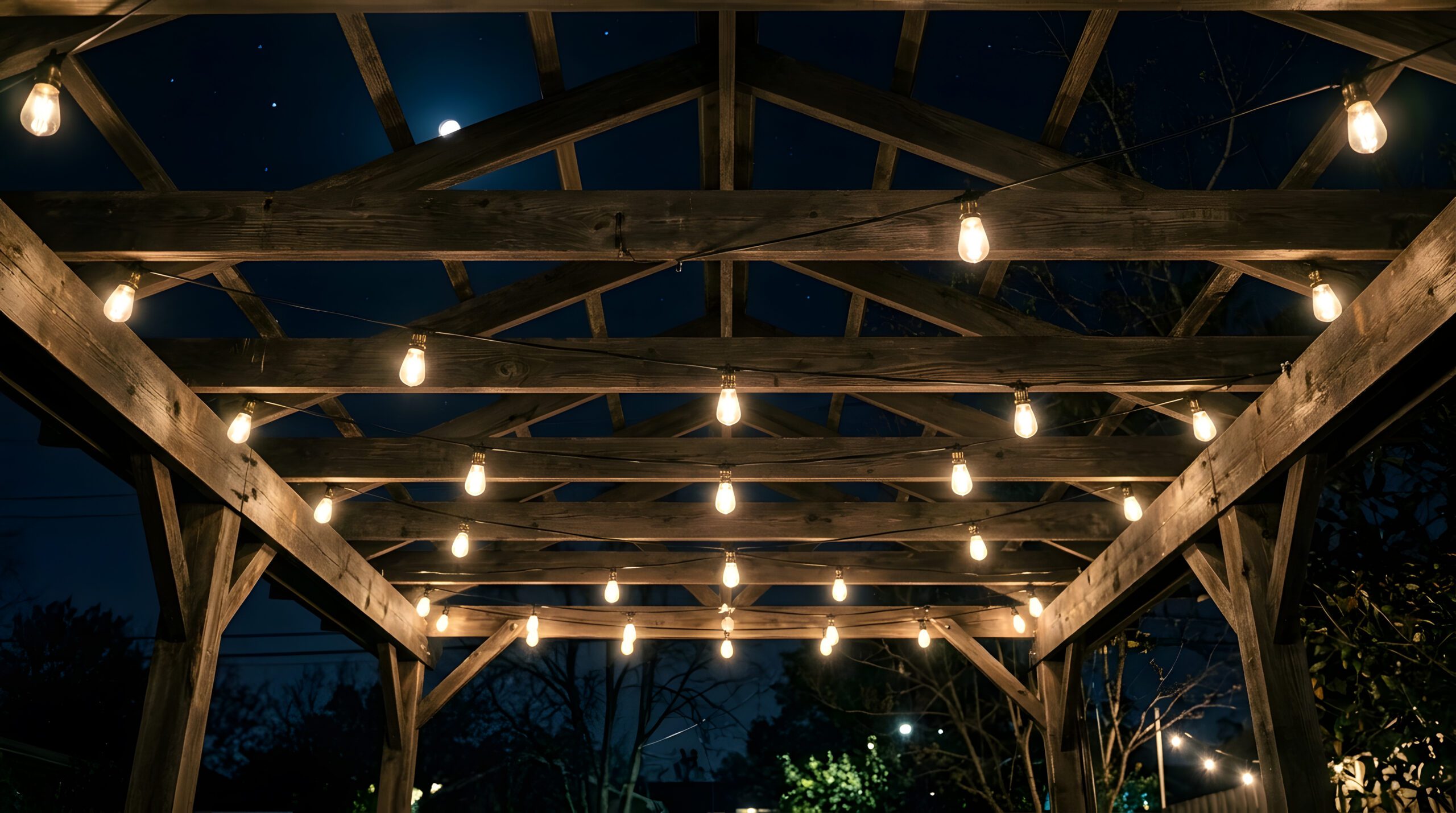
Traditional open-beam pergolas are the classic pergola style, consisting of vertical posts supporting horizontal beams with spaced rafters running perpendicular to the beams above. The open structure allows air movement and filtered light while providing a defined overhead plane that creates the room-like quality of a covered outdoor space. Traditional pergolas can be fitted with shade fabric, climbing plants, or string lights to modify the light and shade they provide, and they suit a wide range of architectural styles from traditional to contemporary.
Louvered pergolas are the category that has grown most dramatically in popularity for Denver homeowners because the adjustable louvers give precise control over shade and airflow that fixed-beam pergolas cannot provide. When louvers are open, the pergola provides air movement and filtered light similar to a traditional open-beam design. When louvers are closed, the pergola provides solid shade coverage and in some systems a degree of rain protection that extends usability into light precipitation. The mechanical systems that operate the louvers range from manual adjustment to motorized operation with remote or smartphone control, and the convenience of effortless adjustment is one of the features that homeowners who invest in motorized systems consistently rate as worth the premium.
Attached pergolas that connect to the house structure at one end create a covered transition between the indoor and outdoor spaces that makes the outdoor area feel like an extension of the living space rather than a separate destination. The attached configuration requires careful attention to the connection between the pergola structure and the house to prevent water infiltration and structural complications that a poorly designed attachment point can create. Freestanding pergolas that stand independently of the house are simpler to engineer and install and can be positioned anywhere in the yard rather than being limited to locations adjacent to the house structure.
Sail shade structures are a simpler and more affordable shade option than a full pergola structure, using tensioned fabric panels attached to anchor points at the corners to create a shaded area beneath. Sail shades are appropriate for some applications but do not provide the structural definition, the overhead feature potential for lighting and fans, or the visual weight of a proper pergola structure. For Denver homeowners who want a true outdoor room with overhead architectural presence rather than simply shade coverage, a pergola is the more appropriate solution. Pergola installation in Castle Rock and surrounding areas shows the range of pergola projects Thunderbird Design has completed across the Denver metro region.
Placement: Getting the Position Right for Denver’s Sun Angle
Pergola placement relative to the sun’s path across the Denver sky is the most important functional decision in the project, and it is one that benefits from specific knowledge of Denver’s sun angle rather than general shade principles that apply to other latitudes.
Denver sits at approximately thirty-nine degrees north latitude, which means the summer sun reaches a high angle in the sky that produces steep shadows that change rapidly during the day. The afternoon sun in Denver during summer tracks from high in the south to lower in the southwest and west as the afternoon progresses, which means that a pergola positioned to block the high midday sun may not provide adequate shade protection from the lower western sun angle that produces the most intense afternoon heat in the three to five in the afternoon window.
Understanding the specific sun angles for your backyard’s orientation and the times of day when shade is most needed for your specific use patterns allows the pergola to be positioned and sized to deliver shade where and when it is most valuable. A pergola that provides excellent midday shade on the dining area but allows full western sun exposure on the seating area during the afternoon entertaining hours is not optimally positioned for the Denver sun pattern.
Proximity to the house affects both the practical convenience of the pergola location and the structural options for connecting it to the house. A pergola directly adjacent to the house back door creates the seamless indoor-outdoor transition that makes outdoor kitchens and dining areas most functional. A pergola positioned further into the yard creates a destination that draws guests away from the house, which suits garden seating areas and fire pit seating where separation from the house is part of the appeal. Landscape design for Denver outdoor spaces is worth exploring for homeowners who want to see how pergola placement integrates with the broader landscape design of a Denver backyard.
Pergola Materials: What Works in Denver’s Climate
Material selection for a Denver pergola requires the same climate-specific thinking that applies to any outdoor structure in Colorado’s UV-intense, freeze-thaw cycling environment.
Wood pergolas have the natural warmth and traditional character that many Denver homeowners prefer aesthetically, but wood in Denver’s outdoor environment requires more maintenance than other material options. Cedar and redwood are the wood species most commonly used for outdoor pergolas because their natural oils provide better rot resistance than pine or other softwoods, but even these species require periodic sealing, staining, or painting to maintain their appearance and structural integrity in Colorado’s UV exposure and weather cycling.
Aluminum pergola systems are the material category that has grown most significantly in the pergola market in recent years, driven by the combination of durability, low maintenance, and the manufacturing precision that allows louvered pergola systems to function reliably over time. Powder-coated aluminum is resistant to UV degradation, does not rot or warp, requires minimal maintenance beyond periodic cleaning, and is available in a range of colors and finishes that suit different architectural styles. The structural precision that aluminum manufacturing allows makes it the standard material for motorized louvered pergola systems.
Steel pergolas provide structural strength and a clean contemporary aesthetic that suits modern architectural styles, though steel requires appropriate coating and maintenance to prevent rust in Colorado’s variable moisture conditions. Corten steel, which weathers to a deliberate rust patina, is used in some contemporary landscape design applications where the weathered aesthetic is intentional rather than a maintenance failure.
Composite lumber materials that combine wood fiber and plastic resins provide a wood-like appearance with improved moisture and UV resistance relative to natural wood, and they are used in some pergola applications where the wood aesthetic is desired with reduced maintenance obligation. The quality and performance of composite lumber products vary significantly between manufacturers, and selecting products with documented performance in outdoor applications is important for long-term satisfaction. Fencing and outdoor structures for Denver properties provide relevant context on material selection for outdoor structural elements in Denver’s climate.
Adding Features: Lighting, Fans, and Heating
A pergola without features is a shade structure. A pergola with integrated lighting, ceiling fans, and heating elements is an outdoor room that is genuinely usable from early morning through late evening across Denver’s full outdoor season.
Integrated lighting within the pergola structure, whether recessed LED fixtures in louvered panels, string lights woven through open beams, or pendant fixtures suspended from the overhead structure, transforms the pergola’s evening character from a dark overhead structure to a warm, ambient outdoor environment. Lighting designed as part of the original pergola installation is cleaner in its integration and more reliably weather-protected than lighting added to a completed structure after the fact.
Ceiling fans mounted to the pergola structure address the calm, warm days that Denver summers occasionally produce when the natural breeze that usually makes outdoor living comfortable is absent. A fan that moves air through the pergola space keeps guests comfortable on still, warm days and in the evenings when temperatures drop, and a gentle air movement enhances rather than cools the outdoor experience.
Patio heaters or infrared heating elements mounted to the pergola structure extend usability into Denver’s cool shoulder season evenings in ways that make the outdoor space genuinely four-season rather than summer-only. Infrared heaters that warm the people and surfaces in the space rather than the air itself are particularly effective in outdoor applications where heated air would simply dissipate into the surrounding environment. Landscape lighting installation for Denver properties is worth exploring for homeowners who want to understand the full lighting design options for a Denver pergola and outdoor living space.
Frequently Asked Questions About Pergola Installation in Denver
Do pergolas require a permit in Denver?
Permit requirements for pergola installation in Denver depend on the size, height, and attachment method of the structure. Attached pergolas that connect to the house structure and freestanding pergolas above certain size thresholds typically require a building permit in Denver and most surrounding jurisdictions. A reputable contractor will identify the permit requirements for your specific pergola project during the planning phase and manage the permit process as part of the project. Attempting to install a pergola that requires a permit without obtaining one creates complications that can affect insurance coverage, home sales, and future modifications to the structure.
How much does a pergola cost in Denver?
Pergola costs in Denver vary significantly based on the style, size, material, and features included. A basic wood pergola in a standard size represents the entry level of the investment range. A motorized aluminum louvered pergola system with integrated lighting, fans, and heating in a larger size represents the upper end of the range. The difference between these two extremes is substantial and reflects genuine differences in material quality, mechanical complexity, and installation requirements. Discussing your specific pergola goals and budget with a landscape contractor during a planning consultation gives you accurate cost information for your specific project.
How long does pergola installation take in Denver?
Pergola installation timelines vary based on the complexity of the structure and the material. A standard wood pergola in a straightforward location can typically be installed in one to three days of active construction. A larger aluminum louvered system with integrated features may require three to five days or more. Permit processing time, if required for the project, adds to the overall timeline from project start to completion and should be factored into scheduling expectations. Planning the project with adequate lead time before the summer entertaining season ensures the pergola is ready when it is most needed.
Can a pergola support climbing plants in Denver?
Yes, and climbing plants are one of the traditional approaches to adding shade and visual interest to open-beam pergola structures. Wisteria, Virginia creeper, climbing roses, and clematis are among the plants used on Denver pergolas with good results. The structure needs to be robust enough to support the mature weight of the plant, and the wood species or material needs to be compatible with the moisture that climbing plant roots and stems can introduce to the structure over time. Discussing the climbing plant plan with your landscape contractor during the pergola design phase ensures the structure is designed to support the plant load and that material choices are compatible with plant contact
What is the difference between a pergola and a patio cover in Denver?
A pergola has an open or partially open overhead structure that allows light, air, and some precipitation to pass through. A patio cover has a solid roof that blocks sun and rain completely. Pergolas provide shade with airflow and sky connection. Patio covers provide complete weather protection at the cost of the open-air quality. Denver homeowners generally favor pergolas over solid patio covers because the combination of shade and airflow that a pergola provides suits Colorado’s typically low humidity and reliable breeze better than the enclosed quality of a solid roof. Thunderbird Design’s project portfolio shows completed pergola and outdoor living projects that give Denver homeowners a realistic picture of what professional pergola installation looks like.
How do I maintain a wood pergola in Denver?
Wood pergola maintenance in Denver involves periodic inspection for checking, splitting, and rot at the post bases and any areas where water can accumulate, reapplication of sealant or stain every two to three years, depending on the exposure conditions and the specific product used, and prompt attention to any fastener corrosion or joint failures that allow moisture to enter the structural connections. Post bases that hold the posts above the concrete footings and allow air circulation beneath the post ends significantly reduce the rot risk at the most vulnerable point of a wood pergola structure. Contact Thunderbird Design to discuss pergola installation options for your Denver backyard.
Make Your Denver Backyard Comfortable All Summer Long
A well-placed pergola transforms the hours a Denver backyard patio is actually usable by making afternoon sun manageable and evening outdoor time genuinely appealing. Call Thunderbird Design at (720) 748-2163 or request a project quote to start planning your Denver pergola installation.