Most Denver homeowners looking for fall landscape maintenance are trying to answer two questions at once: what work actually needs to happen this season, and what am I paying for when a company sends me a fall proposal? Those quotes vary enormously — and the reason usually isn’t pricing; it’s scope. One company’s “fall cleanup” is leaf removal and a final mow. Another’s includes aeration, irrigation winterization, drainage inspection, and plant care.
The direct answer: a complete fall landscape maintenance program in Denver should cover debris and leaf removal, plant and bed care, lawn preparation, irrigation winterization, drainage inspection, mulch refresh, and hardscape protection, scheduled across the September-to-November window in a specific order. Anything less than that isn’t wrong — it’s just narrower, and you should know what’s excluded before you compare prices.
At Thunderbird Design, we build and maintain landscapes across the metro, and our bias shows: we care about what a property looks like in February, not just whether the leaves got picked up in October. Here’s an honest breakdown of the services, the timing, how pricing works, and the questions worth asking whoever you hire.
The Core Fall Maintenance Services
Debris and leaf removal
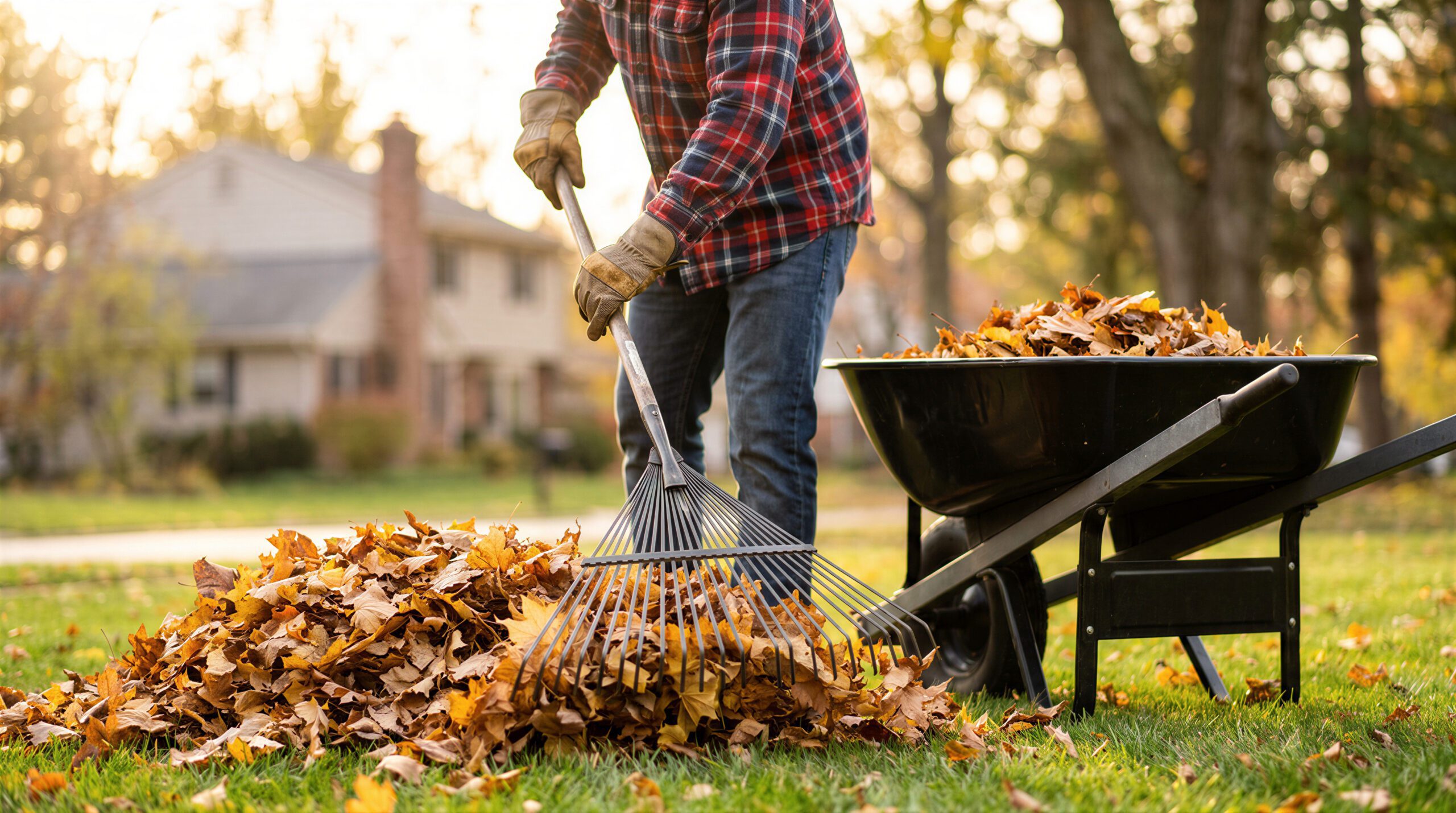
The visible work, and the one everyone expects. Done well, it’s more selective than a blanket clear-out: thin layers of small leaves get mulch-mowed into the lawn as a free soil amendment, while large waxy leaves — cottonwood, silver maple, sycamore — get hauled off before they mat down and cause snow mold. Beds keep a modest leaf layer as insulation. Window wells, drains, swales, and hardscape get cleared completely.
Typically this needs two to three passes, not one, because Denver’s leaf drop is staged across several weeks and a single visit in mid-October means a yard full of leaves by November.
Plant and bed care
This is where experience separates providers. Fall is the wrong time for most pruning — cutting a shrub back hard in September stimulates tender growth that won’t harden off before the freeze. A good crew removes dead, damaged, and hazardous wood, shortens whippy rose canes for wind stability, and leaves structural pruning for late winter dormancy.
It also means knowing what to leave: ornamental grasses standing for winter structure and crown protection, seed heads on coneflower and rudbeckia for interest and birds, spring-flowering shrubs like lilac untouched so next year’s buds survive. Perennials that turn to mush get cut back; the ones that hold form don’t.
Lawn preparation
Cool-season turf does most of its root development in fall, which makes this the highest-return lawn work of the year:
- Core aeration to relieve compaction in clay soil — pulling plugs, not spiking
- Overseeding immediately after aeration, ideally finished by mid-September so seed establishes
- Fall fertilization to feed roots rather than top growth
- Final mow height adjusted slightly down to reduce snow mold risk without scalping crowns
Irrigation winterization
The deadline-driven item. Water left in a backflow assembly or valve cracks brass, and the repair costs far more than the service. Proper winterization means shutting off supply at the stop-and-waste valve, draining the backflow, clearing each zone with compressed air at pressure appropriate to the pipe material, and insulating exposed components. This should be complete before the first sustained hard freeze — in Denver, generally by mid-October. Comprehensive irrigation services also include noting head and coverage problems for spring repair while the system is still being tested.
Drainage inspection
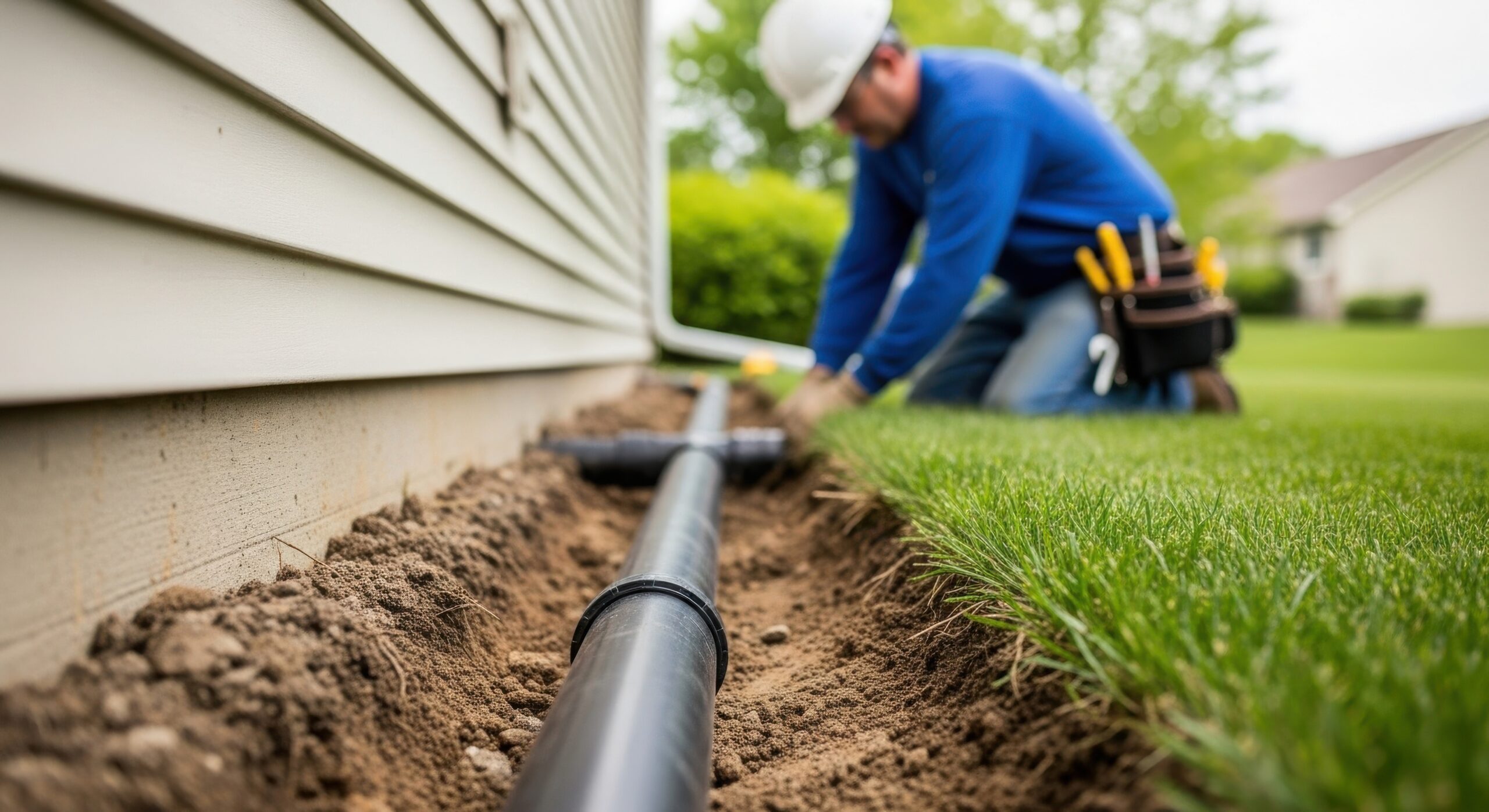
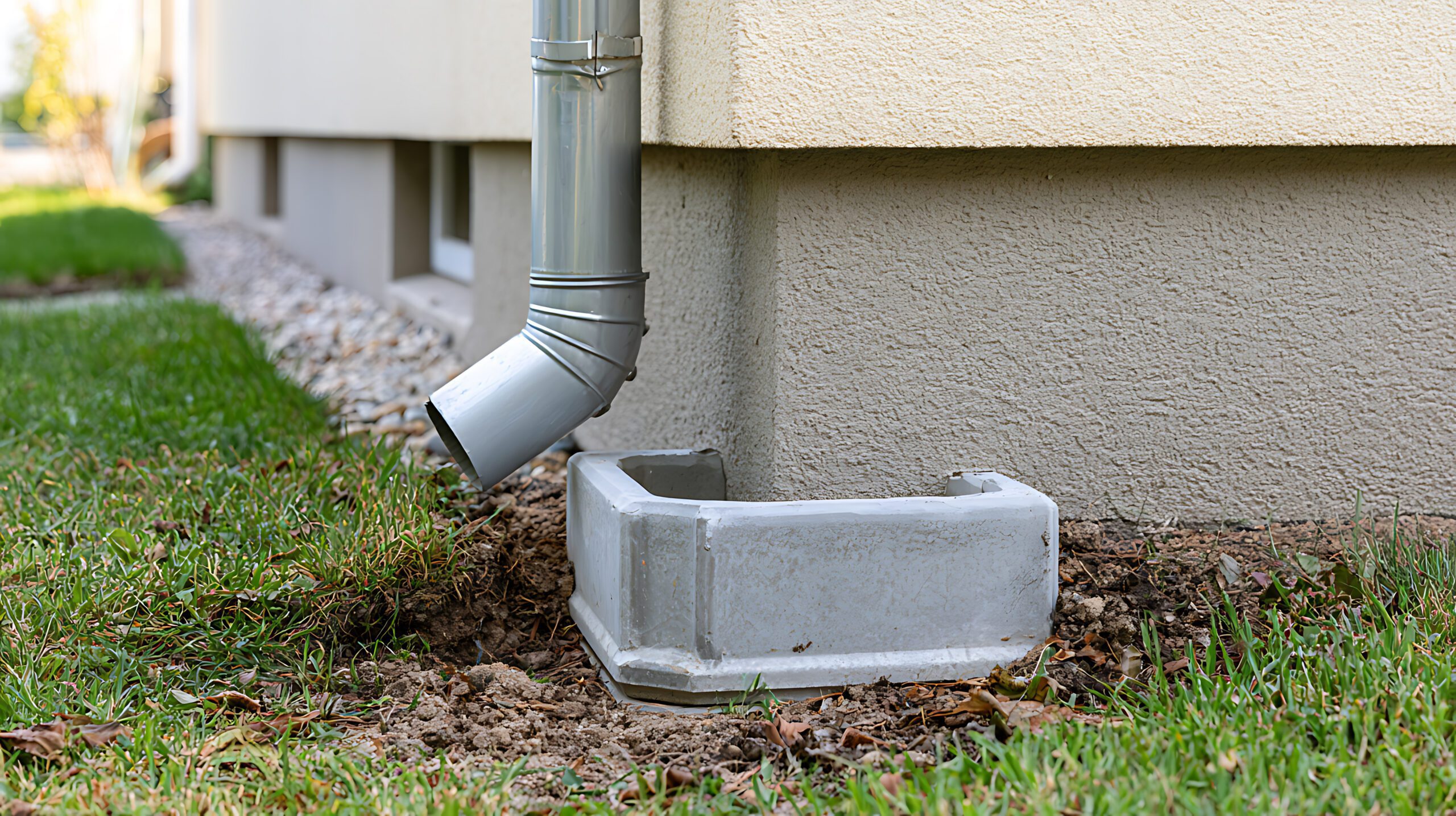
The service most commonly omitted and the one with the largest financial consequence. Before the ground freezes, someone should walk the property specifically looking at water: downspout discharge distance, slope in the first ten feet from the foundation, low spots that hold water for more than 24 hours, and debris in area drains, catch basins, swales, and dry creek beds.
Denver’s expansive clay swells when it takes on water, and that pressure moves foundations, patios, and flatwork. A clogged drain in November is an ice sheet in January. If problems turn up, fall is a good window to correct them — plants are dormant and soil is still workable. Larger corrections fall under drainage and grading work.
Mulch refresh
Two to three inches, applied after the ground cools rather than before, and pulled back from trunk flares and perennial crowns. Mulching too early traps warmth and encourages growth that won’t survive; mulch piled against bark holds moisture and invites rot and rodents. Beds should also be checked for years of accumulated top-dressing that has raised them above the surrounding grade — a common and quietly serious drainage problem on established properties.
Hardscape preparation and winter protection
- Clearing organic debris off flagstone and pavers, where wet leaves stain stone and accelerate freeze-thaw joint damage
- Checking joint material and drainage at patio and wall edges — relevant on any property with patios or retaining walls
- Deicer guidance: sand or gravel for traction instead of rock salt, which spalls concrete, degrades mortar joints, and leaves salt in the soil where it kills adjacent plantings. Never deice concrete poured within the past year.
- Tree wrap on young, thin-barked trees — maple, linden, honeylocust — to prevent winter sunscald on our intensely sunny days. One of the most common preventable losses on new Denver landscapes.
- Setting up a winter watering plan, because our dry winters mean roots desiccate even under snow cover
Fall Service Timing in Denver
Order matters. Doing the right task in the wrong month wastes the effort.
| Window | Services | Why now |
| Late August – mid September | Core aeration, overseeding, fall fertilization | Warm soil and cooling air is peak root-growth season; seed needs weeks to establish |
| Late September – mid October | Irrigation winterization, drainage inspection, first leaf pass | Must precede the first hard freeze |
| Mid October – early November | Additional leaf passes, perennial cutback, deadwood removal, hardscape clearing | Most leaf drop completes; plants dormant |
| After first hard freeze | Mulch refresh, tree wrap, winter watering schedule begins | Soil has cooled; wrap protects through the sunny months ahead |
Denver’s first freeze typically arrives in early to mid-October, though it varies and urban neighborhoods often run later than the airport. Schedule freeze-sensitive services for late September rather than gambling on a warm October.
How Fall Maintenance Pricing Is Structured
Understanding the models makes proposals comparable.
Per-visit / one-time cleanup. A flat or hourly price for a defined scope on a single date. Simple, but a single visit rarely covers staged leaf drop, and add-ons get billed separately.
Seasonal fall package. A bundled scope across multiple visits — usually the best value if the scope genuinely includes the technical items. Read what’s in it.
Annual maintenance contract. Fall work included in a year-round program with regular visits. Best fit for properties with significant planting design, irrigation, or hardscape investment, where continuity of knowledge matters. This is how we prefer to handle properties we’ve designed and built, and it sits alongside the rest of our landscape services.
À la carte technical services. Irrigation blowout, aeration, and drainage correction priced individually, often on top of a base cleanup.
What actually drives the number:
- Lot size and planted area — though tree canopy matters more than square footage
- Tree count and species; three mature cottonwoods generate more volume than a quarter acre of turf
- Debris disposal volume and hauling
- Access — gated backyards, steep grades, and narrow side yards change labor hours substantially
- Number of visits
- Whether irrigation, aeration, and drainage are included or extra
- Planting complexity; a designed perennial and grass landscape takes skilled hands, not a blower
Be skeptical of a fall quote given over the phone without a site visit or at least photos. Debris volume and access are the two largest cost variables and neither is visible from an address.
Questions to Ask Before You Hire
- Is irrigation winterization included, and when will it be scheduled? If it’s not on the proposal, the deadline is your problem.
- How many visits does this include? One-pass leaf removal in a staged-drop climate leaves you doing it again.
- What’s your approach to fall pruning? If the answer is enthusiastic about cutting everything back, that’s a warning sign. The right answer involves not pruning most things until late winter.
- Will someone inspect drainage before the freeze? The highest-value fifteen minutes of the entire visit.
- What happens to the debris? Hauled and composted, or blown into the street? The latter contributes to neighborhood flooding and is prohibited in many municipalities.
- Are you licensed and insured, and do you carry workers’ comp? Non-negotiable for anyone using power equipment or ladders on your property.
- Who does tree work? Anything requiring a ladder or overhanging a structure should go to a licensed arborist, not a maintenance crew.
- Is winter watering guidance or service part of the program? Most “winterkill” diagnosed in spring is actually drought.
- Will the same crew return in spring? Continuity means someone remembers what was planted, where the drain outlets are, and which zone has a bad valve.
What Design-Forward Maintenance Looks Like
Worth naming plainly, because it’s the difference between two proposals that look similar on paper.
Standard maintenance treats a landscape as a surface to keep clear. Design-forward maintenance treats it as a composition that changes across seasons. In practice:
- Winter interest is planned, not accidental. Grasses left standing, seed heads catching frost, evergreen structure, a dry creek bed that reads as a feature — these are decisions made in October about what February looks like.
- Plants are pruned according to species and habit, not uniformly at one height on one date.
- Fall is used as an assessment window. Dormancy is when you can actually see structure, spot the shrub that’s outgrown its place, and identify where the design has drifted. The best time to plan spring changes is while looking at a bare landscape.
- The crew knows the site. Where the drain outlets are, which perennials come back late in spring and shouldn’t be dug out, which zone has poor coverage.
Our project portfolio is a reasonable way to judge whether a company thinks this way — look at whether the landscapes have structure that would still read well in January.
If your landscape looks flat and empty every winter, that’s usually a design gap rather than a maintenance failure, and it’s fixable — often with plant additions made during fall’s ideal planting window. That’s a landscape design consultation conversation, and fall is when the observations that inform it are easiest to make.
Denver Metro Service Considerations
Conditions vary meaningfully across the metro, and a crew that works the area knows it. Older neighborhoods like Park Hill, Wash Park, and the Highlands have mature canopy — enormous leaf volume, root conflicts with drainage work, and narrow alley access that limits equipment. Newer developments in Centennial, Aurora, and the south metro tend toward young plantings, settling builder backfill, and HOA drainage easements that can’t be altered. Foothills-adjacent properties in Lakewood, Golden, and Arvada face more wind, more slope, and steeper grades, while properties in Westminster, Castle Rock, and Cherry Hills each bring their own mix of exposure, soil, and covenant requirements.
One scheduling note for commercial property managers: fall maintenance and commercial snow removal contracts are best negotiated together, because the same crews and the same site knowledge carry across both seasons.
Soil is the constant: clay-dominated, slow-draining, expansive. Every recommendation above traces back to that, which is why we’ve written separately about drainage on Denver clay soil.
Frequently Asked Questions
What’s included in fall landscape maintenance in Denver?
A complete program covers leaf and debris removal across multiple visits, selective pruning and perennial cutback, core aeration with overseeding and fall fertilization, irrigation winterization, pre-freeze drainage inspection, mulch refresh after the ground cools, and hardscape and tree protection for winter.
When should fall landscape maintenance be scheduled in Denver?
Lawn services in late August through mid-September, irrigation winterization and drainage inspection by mid-October, leaf removal through early November, and mulch and tree wrap after the first hard freeze.
How much does fall cleanup cost in Denver?
It depends on tree canopy and debris volume, property access, number of visits, and whether technical services like aeration and irrigation blowout are included. Because debris volume and access are the largest variables, a site visit or photos produce a far more reliable quote than an address alone.
Is fall cleanup the same as fall landscape maintenance?
No. Cleanup usually means leaf and debris removal with a final mow. Full maintenance adds plant care, lawn preparation, irrigation winterization, drainage inspection, mulch, and winter protection. Compare scopes rather than prices.
Do I need to have my sprinklers blown out professionally?
It’s the service most worth outsourcing. Water left in the backflow assembly can crack expensive components, and clearing zones requires compressed air at pressure appropriate to the pipe material — too much air damages the system.
Should I have my drainage checked in the fall?
Yes. It’s the cheapest preventive step available and the timing is ideal: problems found before the freeze can often be corrected while soil is still workable, and spring snowmelt is the event most likely to cause damage.
Is fall a good time to plant in Denver?
Often yes. Cooler air and still-warm soil favor root establishment for trees, shrubs, and many perennials, provided new plantings get consistent water into early winter. It’s also the best time to evaluate structure and plan changes.
Should I sign an annual contract or book a one-time cleanup?
One-time works for straightforward properties where you mainly need leaves gone. An annual program makes more sense on properties with designed plantings, irrigation, and hardscape, where crew familiarity and consistent seasonal timing prevent expensive gaps. If you want a sense of what fall involves before deciding, our fall yard prep guide walks through the whole season.
Choosing the Right Fall Program
The best test of a fall maintenance proposal isn’t the price — it’s whether it addresses the things that cause damage. Leaves are cosmetic. Water in the wrong place, a cracked backflow preventer, a shrub pruned at the wrong time, an untreated ice patch at your front door: those cost real money, and they’re the reason the technical items on the scope matter more than the visible ones.
Whoever you hire, make sure irrigation winterization and a drainage check are on the list, and make sure the leaf work is scheduled across enough visits to actually keep up with the drop.
If you’d like a scope built for your specific property, contact our team and we’ll walk the site, flag anything that needs attention before the freeze, and put together a fall plan that also sets your landscape up for a better spring.